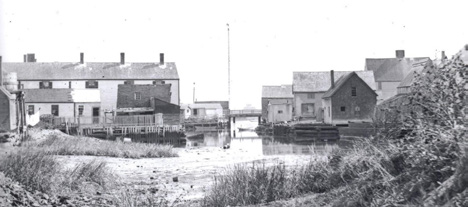
Portsmouth, NH – Chapman Construction/Design announced it has been selected to provide preconstruction services to the Strawbery Banke Museum in Portsmouth. Strawbery Banke is an outdoor history museum and New Hampshire’s first Smithsonian affiliate that preserves a variety of historic structures showcasing 350 years of cultural evolution in a seaside community.
Located in the South End historic district of Portsmouth, the campus has faced increasingly impactful challenges related to sea level rise, groundwater intrusion, and stormwater management. These challenges threaten the long-term viability of its historic structures and ability to serve as a resource for living history, events, and education in the region. Chapman will assist Strawbery Banke with the planning and implementation of a comprehensive resiliency and landscape restoration plan designed to address localized flooding and water quality challenges within the site.
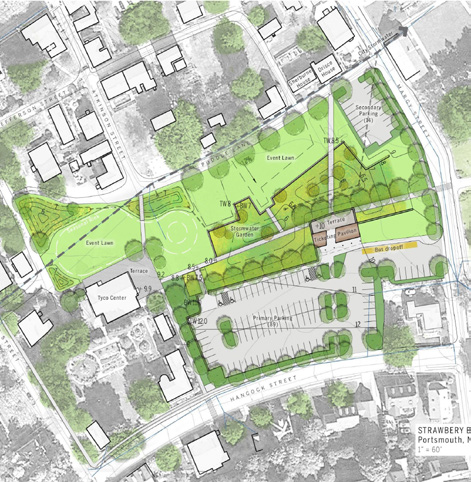
In this initial assessment stage of the project, Chapman will provide recommendations for achieving the numerous goals and objectives that Strawbery Banke’s leadership has identified as essential to ongoing preservation of the structures and maintaining public access. The proposed improvements include a bioretention system to treat and clean stormwater before discharge, parking lot enhancements, outdoor event space redesign, visitor wayfinding/site interpretation, and associated landscaping and grading, all of which are dependent on meeting future funding goals. Native and pollinator supporting species will be prioritized for planting to strengthen local ecology while minimizing maintenance.
Chapman’s approach will align with USGBC CA’s Contractor’s Commitment, a sustainability framework the firm helped pilot, which integrates carbon reduction, jobsite wellness, waste and water management, and environmental stewardship into every project. The team will evaluate opportunities to use electric or R99 diesel powered equipment, specify low-embodied-carbon concrete and materials, and incorporate biophilic design strategies that connect visitors with the surrounding landscape.
“As we embark on a next chapter that confronts the ramifications of rising sea levels with a desire to remain a permanent reminder of our region’s past, it is clear that our campus will need to adapt,” said Rodney Rowland, director of environmental sustainability, Strawbery Banke Museum.
“Few places capture the balance between preservation and progress like Strawbery Banke,” said John Hyde, director of sustainability, Chapman Construction/Design. “This project shows how historic sites can lead by example, reducing carbon, restoring ecology, and building resilience without losing their sense of place. By using low carbon strategies, we’re ensuring that the effort to safeguard this campus doesn’t add to the climate impacts that make this work necessary.”